
Minnesota & Arizona
Attic Insulation & Air Sealing
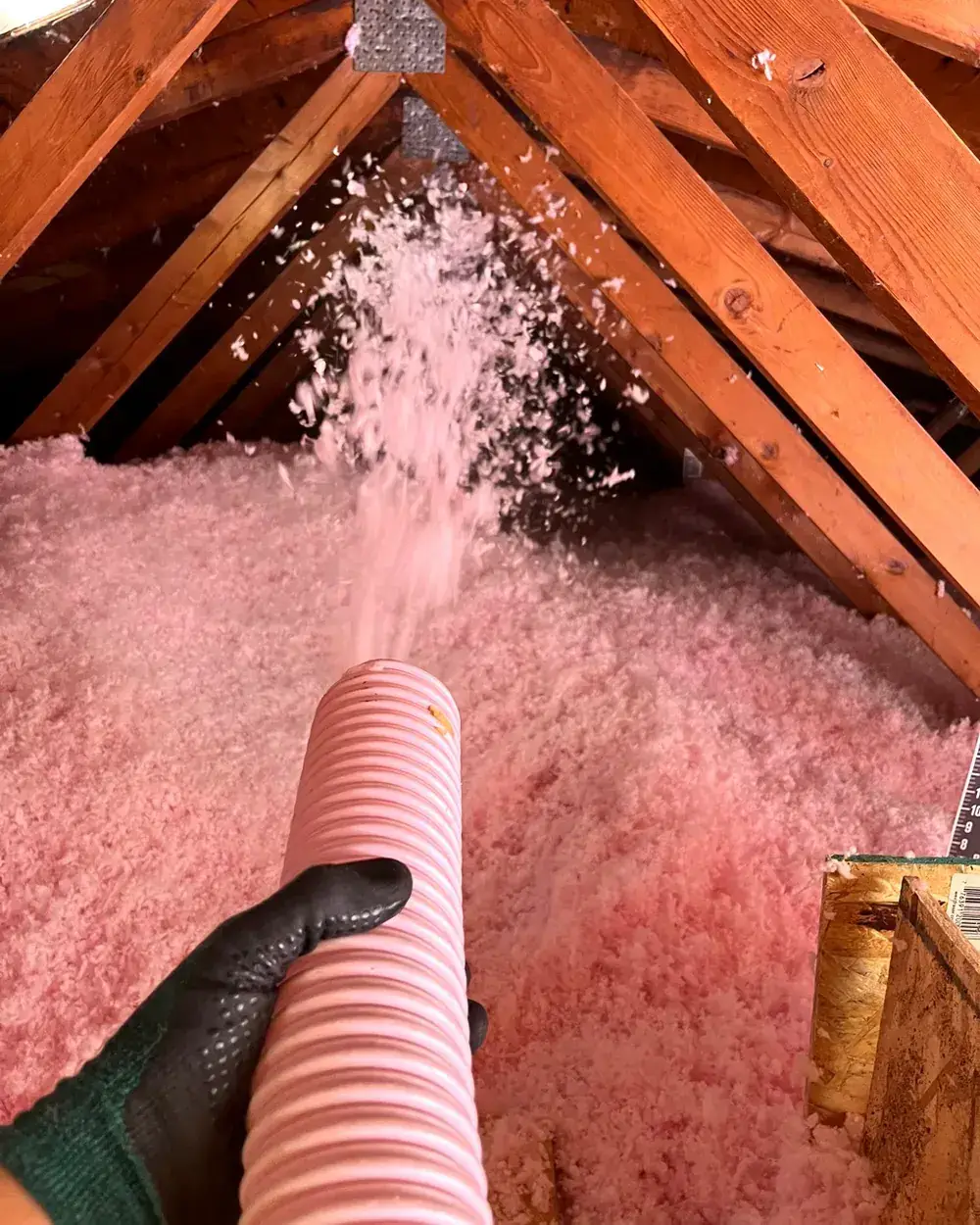
A warmer home and lower energy bills, without the hassle. We inspect your attic for free, seal the leaks, and blow in insulation to R-49 or higher, usually in just 1–2 days.
Beat the cold. Get your attic insulated before winter sets in.
Free, no-obligation inspection · In-house, background-checked crews · Rebates may be available
- 100+ years family-owned
- In-house, background-checked crews
- 5-year workmanship warranty
- Owens Corning Top of the House certified
- Owens Corning Platinum Preferred
- Xcel Energy Trade Partner
The problem
Is Your Attic Costing You?
Most homes lose more heat through the attic than anywhere else, and you feel it.
Higher energy bills
Heat you paid for drifts into the attic all winter (and into your living space all summer).
Ice dams and roof damage
Warm attic air melts snow on the roof, which refreezes at the eaves and can back water under your shingles.
Cold, uncomfortable rooms
Upstairs bedrooms that never warm up, plus drafts around lights and the attic hatch.
Attic moisture and frost
Warm, moist air leaking into a cold attic can condense on the roof deck and damage wood and insulation.
Homes built before the 1980s were often insulated to just R-11 to R-19, a fraction of today’s R-49 standard in Minnesota.
1-minute self-check
Is Your Attic Under-Insulated? Take the 1-Minute Self-Check
Answer yes or no to each question. The more “yes” answers, the more your attic is likely costing you.
- Can you see the tops of your ceiling joists in the attic?
- Do icicles or ice dams form along your eaves in winter?
- Are upstairs rooms much colder (or hotter) than downstairs?
- Do you see frost, dampness, or dark stains on the underside of the roof in winter?
- Do you feel drafts around ceiling lights, outlets, or the attic hatch?
- Is your home older (pre-1990) with its original attic insulation?
- Does snow melt off your roof faster than your neighbors'?
- Do bathroom fans vent into the attic, or are their ducts uninsulated?
- Have your heating and cooling bills been climbing?
What your answers mean
0–1 yes
Likely in good shape
Recheck every few years, and after any roof work.
2–3 yes
Worth a closer look
A free inspection will show exactly where heat is escaping.
4+ yes
Strong signs of heat loss
Your attic is likely costing you money and comfort. Schedule a free inspection.
How it works
How a Healthy Attic Works
Ventilation, insulation, and air sealing work together as one system. Get one wrong and the others can’t do their job.
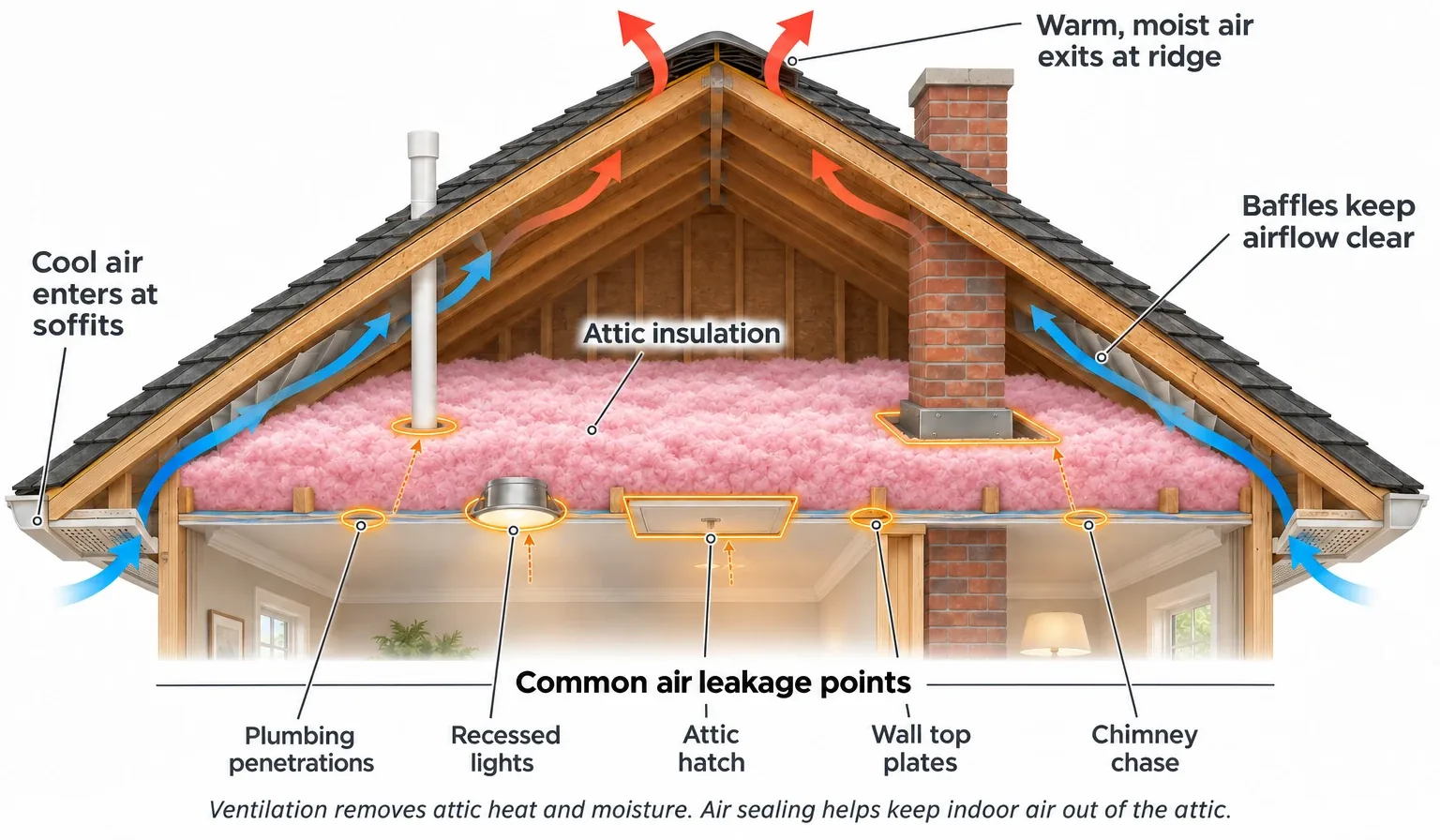
Intake and exhaust
Cool air enters at the soffits and warm, moist air exits at the ridge, keeping the roof deck cold in winter.
Baffles keep airflow clear
Air chutes at every eave stop insulation from blocking the soffit vents.
Air sealing stops the leaks
Plumbing penetrations, recessed lights, the attic hatch, wall top plates, and chimney chases are sealed before insulating.
The difference
Before and After a Tacheny Attic Project
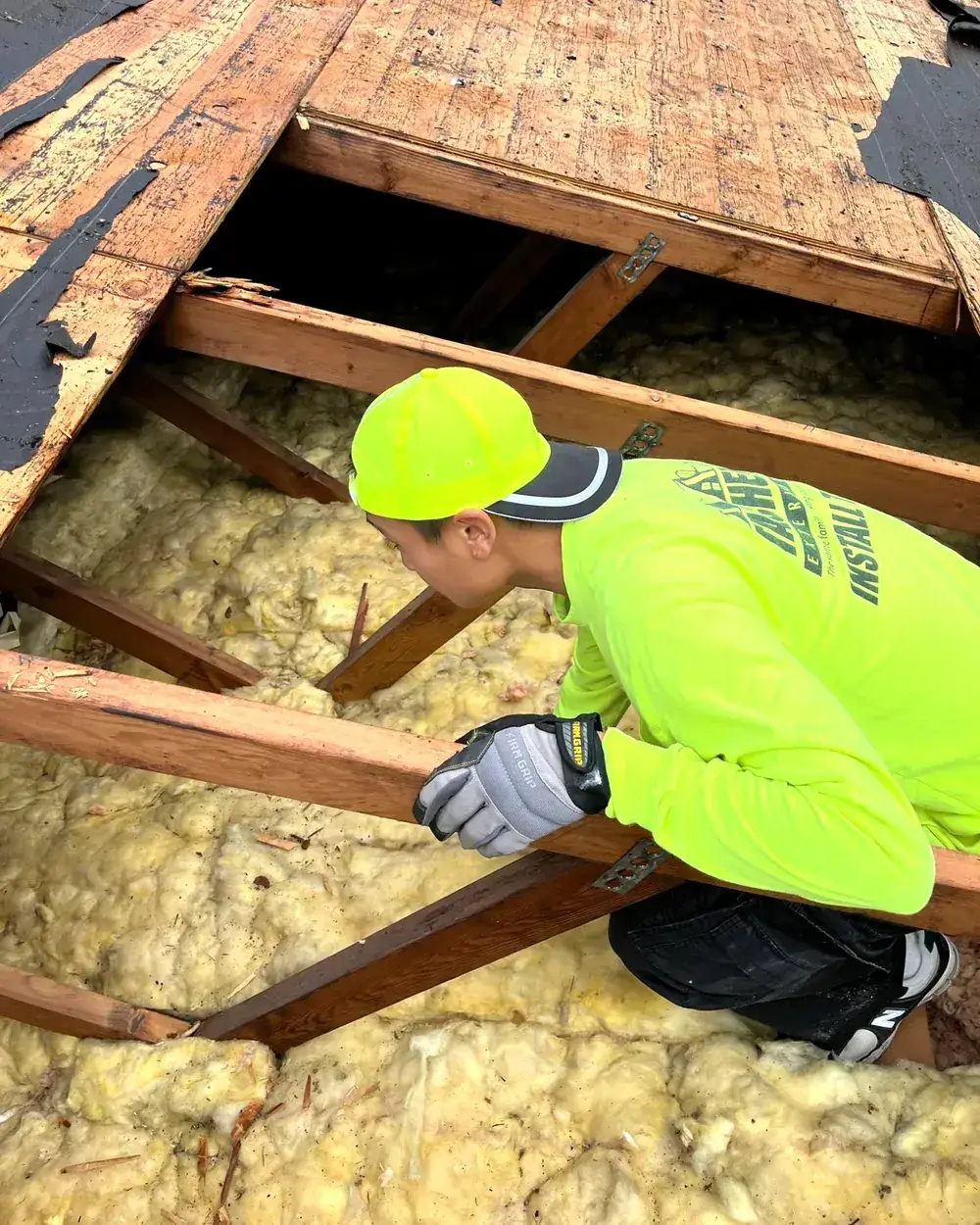
Under-insulated attic
- Heat escaping into the attic and higher bills
- Ice dams and roof damage
- Cold, drafty upstairs rooms
- Frost and moisture in the attic
- Insulation level with or below the joists
After Tacheny
- Leaks sealed first, then insulated once
- Insulated to R-49 or higher (R-60 recommended)
- Clear airflow at the eaves with baffles and soffit intake
- ENERGY STAR estimates an average 15% savings on heating and cooling
- Fewer ice dams and even, comfortable temperatures
Why Tacheny
Why Homeowners Choose Tacheny
We know what it’s like to fight a cold house and a high heating bill. We’ve been fixing homes for over 100 years.
The whole system, not just insulation
We’re Owens Corning Top of the House certified, trained in how insulation and ventilation work with your roof as one system. Air sealing, baffles, soffit intake, and bath fan ducts are all part of the plan.
True Minnesota R-values
Minnesota requires insulation to perform at winter temperatures, which takes extra depth. We install to the Minnesota chart, not the national one, and build every plan to current code.
Our own people in your home
Every installer is a Tacheny employee: screened, verified, and background-checked. No subcontractors.
Backed by a 5-year warranty
Your attic insulation work is covered by our 5-year workmanship warranty. Because we replace roofs too, we understand how your attic and roof work together.
The process
Your Attic, Done Right in Three Simple Steps
Step 1
Free inspection & consultation
A Tacheny project consultant inspects your attic, ventilation, and air leaks (30–60 minutes), then walks you through what we found.
Step 2
Your custom plan
We recommend exactly what your attic needs to meet code (R-49 minimum, R-60 recommended), with clear pricing.
Step 3
Installation in 1–2 days
Our crew seals, baffles, and insulates, then cleans up. When rebates apply, we file the paperwork for you whenever possible.
What's included
What's Included in Every Attic Insulation Project
- Air sealing of plumbing penetrations, chimney and furnace-flue chases (with fire-rated materials), skylight tunnels, solar tubes, light fixtures, and the attic hatch
- Baffles (air chutes) at every eave so insulation doesn't block airflow
- Soffit ventilation check so outside air actually reaches the baffles
- Bath fan duct check: uninsulated hoses replaced with insulated ducts as needed
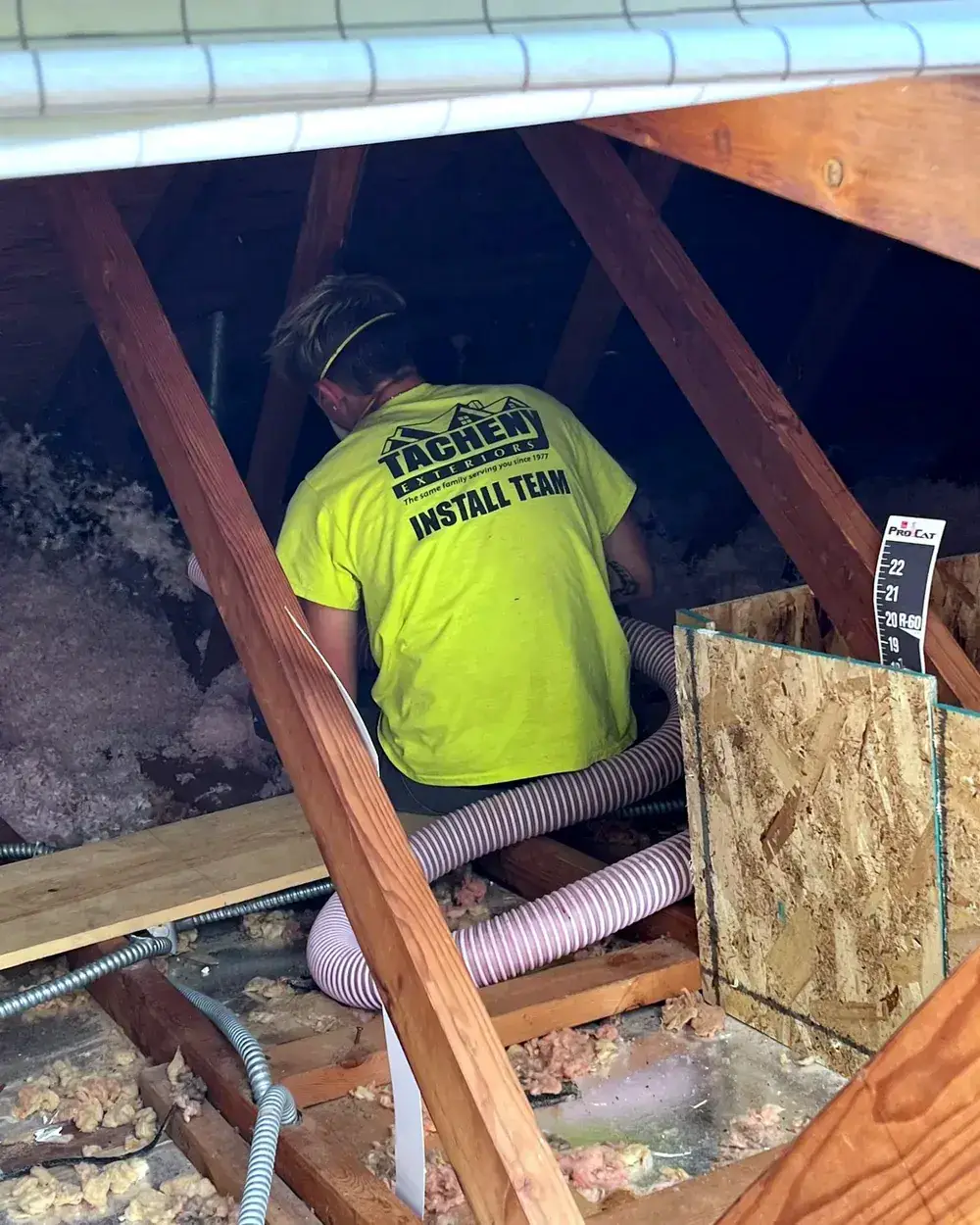
- Blown-in Owens Corning AttiCat® fiberglass to R-49 or higher (R-60 recommended)
- Old insulation removal when it's moldy or pest-damaged. Otherwise we add new insulation over your existing layer
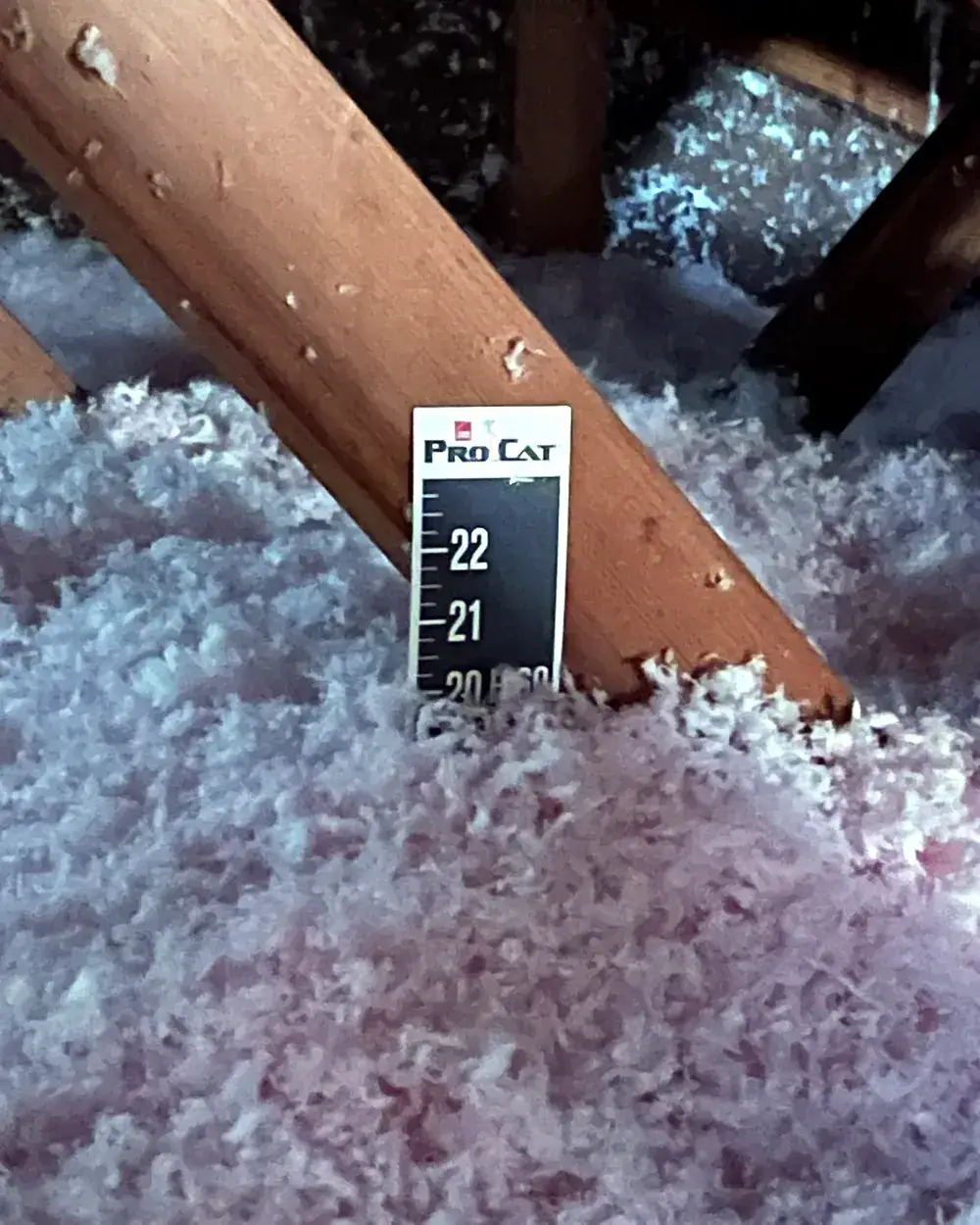
- Code documentation: depth markers throughout the attic and a placard at the hatch showing your before-and-after R-values
- 5-year workmanship warranty
Recommended levels
How Much Attic Insulation Do You Need?
| Minnesota | Arizona | |
|---|---|---|
| Code minimum (attic) | R-49 | R-38 |
| We recommend | R-60 | R-38 or higher |
| AttiCat depth, national chart | ~17″ (R-49) · ~20.5″ (R-60) | Per manufacturer chart |
| Minnesota winter-temperature chart | Add about 2–3″ more | Not required |
If your insulation is level with or below the tops of your ceiling joists, you almost certainly need more. A free inspection measures exactly where you stand.
Why R-49 in Minnesota Means More Insulation Than R-49 Elsewhere
- Minnesota has a stricter rule than most states: insulation must deliver its stated R-value at winter design temperatures (about -16°F in Minneapolis), not just in mild test conditions
- Manufacturers publish Minnesota-specific coverage charts with the extra depth needed
- In practice, a true Minnesota R-49 or R-60 usually takes about 2–3 extra inches of insulation
What it means for you: some installers blow to the national depth and call it R-49. We install to the Minnesota depth, so you actually get the R-value you’re paying for.
Air sealing
Why Air Sealing Comes First
- Insulation slows heat; it doesn’t stop air.
- Leaks carry warm, moist air into the attic, driving ice dams, frost, and wasted energy
- ENERGY STAR recommends sealing the attic before adding insulation
Order matters
If leaks are sealed after insulating, crews have to dig through and mat down the new insulation, which then has to be redone. That’s why every Tacheny attic project seals the leaks first, then insulates, once.
Materials
Blown-In Fiberglass vs. Cellulose vs. Spray Foam
All three can meet code. The install matters more than the material: air sealing, even depth, baffles at the eaves, and a sealed hatch.
| Blown fiberglass (what we install) | Blown cellulose | Spray foam | |
|---|---|---|---|
| Moisture | Doesn’t absorb water | Absorbs moisture (paper-based) | Varies by type (closed-cell resists moisture) |
| Settling | Negligible (AttiCat) | Settles over time; installed deeper to compensate | Doesn’t settle |
| Weight on ceilings | Light | Heavier | Light |
| Air sealing on its own | No (we air seal first) | Slows air more than loose fiberglass, but doesn’t seal | Yes |
| Typical use | Attic floors, new and top-up | Attic floors | Rim joists, roof decks, hard-to-reach areas |
| Relative cost | $ | $ | $$$ |
Why we use Owens Corning AttiCat® fiberglass
- Doesn't absorb moisture the way paper-based cellulose can
- Lightweight, with no added strain on ceilings
- Doesn't settle like cellulose, so it holds its R-value over time
- Formaldehyde-free (UL Environment validated)
Your climate
Attic Insulation for Minnesota Winters and Arizona Summers
Minnesota: attic insulation and ice dams
Ice dams start in the attic, not on the roof.
- Heat and warm air escape into the attic
- The roof deck warms and melts snow from below
- Meltwater refreezes at the cold eaves and backs up under shingles
The lasting fix: air seal → insulate to code → balanced ventilation. Learn more about our roofing services.
Arizona: attic heat and cooling costs
- Poorly ventilated attics can reach 150–160°F on summer afternoons
- Insulation to R-38+ and air sealing keep that heat out of your living space
- Balanced ventilation (soffit intake + roof exhaust) reduces heat buildup
Arizona homeowners: schedule a free attic consultation at a time that’s convenient for you. We’ll assess your attic and walk you through a custom plan and estimate.
Rebates
Attic Insulation Rebates
- Tacheny is an Xcel Energy Trade Partner
- We file rebate paperwork for you whenever possible
- Ask about current rebate programs during your free inspection
Cost
What Does Attic Insulation Cost?
What affects the cost
- Attic size
- How much insulation is already there
- How much air sealing is needed
- Whether old insulation needs removal
- Baffles, bath fan ducts, and ventilation fixes
Clear pricing, no surprises
A typical 1,200 sq ft attic with air sealing, baffles and a top-up runs $5,700–$6,300 to R-49 in Minnesota and $3,400–$3,700 to R-38 in Arizona. See all our attic insulation prices. Your free inspection includes a custom plan with clear pricing, so you know exactly what your attic needs before any work begins.
FAQ
Attic Insulation FAQs
How much does it cost to insulate an attic?
It depends on attic size, how much insulation is already there, how much air sealing is needed, and whether old insulation must be removed. Your free inspection includes a custom plan with clear pricing.
How do I know if I need more attic insulation?
If your insulation is level with or below the tops of your ceiling joists, or you have ice dams, cold rooms, or high bills, you likely need more. Our free inspection measures your current R-value.
How much insulation do I need in my attic?
In Minnesota, code requires R-49 and we recommend R-60. In Arizona, code calls for R-38. Your inspection shows how much you have now and how much to add.
How thick should attic insulation be?
With Owens Corning AttiCat, R-49 is about 17 inches and R-60 about 20.5 inches. In Minnesota, add roughly 2–3 more inches, because insulation must deliver its rating at winter temperatures.
What is the best insulation for an attic?
For most attics, blown-in insulation is the best fit because it fills gaps and irregular spaces evenly. We use Owens Corning AttiCat fiberglass: it doesn’t absorb moisture, doesn’t settle like cellulose, and is formaldehyde-free. Proper air sealing and baffles matter as much as the material.
How long does attic insulation last?
Fiberglass insulation can last for decades when it stays dry and undisturbed. It should be replaced if it gets wet, moldy, or damaged by pests, or topped up if it’s below today’s recommended levels.
Why does Minnesota need more inches for the same R-value?
Minnesota requires insulation to deliver its stated R-value at winter design temperatures. Manufacturers publish Minnesota coverage charts, and reaching a true R-49 or R-60 usually takes a few extra inches. We install to the Minnesota chart.
Can you add insulation over my old insulation?
Yes. If it’s dry and in good condition, we blow new insulation over it. We remove it only if it’s moldy or pest-damaged (for example, from mice), so you’re not paying to replace insulation that still works.
Why do you air seal before insulating?
Insulation doesn’t stop airflow. Sealing leaks first keeps warm, moist air out of the attic, improving comfort and helping prevent ice dams and frost. It also avoids disturbing new insulation later.
How long does attic insulation take?
The consultation takes 30–60 minutes. Most installs take 1–2 days, depending on attic size.
Will attic insulation help with ice dams?
Yes. Air sealing, insulation, and balanced ventilation together address the root cause of most ice dams.
What are attic baffles and why do I need them?
Baffles (air chutes) keep insulation from blocking the vents at your eaves, so outside air can flow through the attic and keep the roof deck cold in winter.
Are there rebates for attic insulation?
Often, yes. Tacheny is an Xcel Energy Trade Partner and files rebate paperwork whenever possible. Ask about current programs during your inspection.
Do you use subcontractors?
No. Your project is completed by Tacheny’s own screened, background-checked employees.
Is there a warranty?
Yes. Attic insulation work includes a 5-year workmanship warranty.
Free attic inspection
Ready for a Warmer, More Efficient Home?
Picture this winter: even temperatures upstairs, fewer icicles on the eaves, and a lower heating bill. It starts with a free attic inspection and a custom insulation and ventilation plan, with no pressure and no obligation.
- Free, no-obligation inspection and consultation
- In-house, background-checked crews
- 5-year workmanship warranty
- We file rebate paperwork whenever possible
Schedule Your Free Attic Inspection
"*" indicates required fields